




Knowledge Hub

 Flagship Programme
Food Systems for Food Security (FS4FS)
Background
Concern Worldwide’s Food Systems for Food Security (FS4FS) approach builds on over a decade of integrated agriculture and nutrition programming, including Realigning Agriculture to Improve Nutrition (RAIN), Accelerating Nutrition and Sustainable Agriculture and Resource Management (ANSARM), and Linking Agriculture and Natural Resource Management towards Nutrition (LANN), which demonstrated that combining agriculture, nutrition, market systems and gender equality can sustainably improve food and nutrition security for people living in extreme poverty.
Since 2022, Concern has implemented FS4FS as a dedicated, multi‑country programme funded under Irish Aid’s Long‑Term Development support, consolidating this evidence into a coherent food systems model.

Context
Food insecurity in the countries where Concern works is driven by intersecting challenges, including climate shocks, conflict and fragility, weak market systems, gender inequality, and limited access to productive resources and services.
FS4FS responds to these realities by addressing food security through a systems lens, recognising that food availability, access, utilisation and stability are interdependent and shaped by social, economic and environmental factors. This approach aligns with Ireland’s Civil Society Partnership for a Better World (ICSP) Thematic Outcome 9: strengthening food systems to deliver food and nutrition security while supporting economic development and protecting the natural environment.

Approach
FS4FS works across the four pillars of food security. Across all pillars, the programme prioritises women, youth and other marginalised groups, and adapts activities to conflict‑affected, fragile and more stable contexts.
Availability
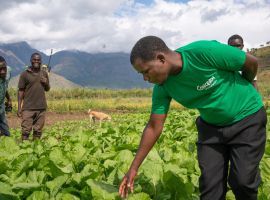
Climate‑smart agriculture, crop diversification, natural resource management, and strengthened agricultural extension services.
Access
Utilisation
Stability


Where is Concern implementing FSF4S?
FS4FS is currently implemented in Central African Republic (CAR), Liberia, Malawi, Niger and Sierra Leone through multi‑year Irish Aid‑funded programmes. While the overarching framework is consistent, each country programme defines a context‑specific package of activities reflecting local food systems, risks and opportunities, including rural-urban linkages in Malawi and Liberia, and recovery‑focused approaches in conflict‑affected CAR.
Integrated Frameworks
FS4FS draws on and integrates multiple Concern frameworks and commitments, including:
- The four food security pillars as an organising programme logic.
- Nutrition‑sensitive agriculture and ‘direct to consumer’ principles.
- Gender‑transformative approaches embedded within livelihoods and market activities.
- Climate adaptation and environmental sustainability, including climate‑smart agriculture and natural resource management.
- Systems strengthening at micro, meso and macro levels, linking households, markets, services and policy processes.
This integration enables FS4FS to operate across humanitarian, resilience and development contexts.

Research and Learning
Concern has embedded research and learning within FS4FS to strengthen evidence‑based programming and influence. This includes multi‑country research on food systems, conflict and market inclusion, partnerships with academic institutions, and ongoing learning linked to programme implementation. Current research focuses on barriers to economic improvement for smallholders and micro‑businesses, gendered power dynamics within food systems, and pathways for more equitable market engagement. Findings are used to inform programme adaptation and policy dialogue.
Emerging Lessons
Across FS4FS programmes, emerging learning highlights that:
- Integrated approaches linking production, markets, nutrition and gender generate stronger food security outcomes than standalone interventions.
- Climate‑smart practices and diversification improve resilience but require sustained extension and market access.
- Women’s economic empowerment strengthens household food and nutrition security when embedded across all pillars.
- Private‑sector engagement can enhance access to inputs and markets when carefully structured to avoid exclusion.

Learning Resources
Food Systems for Food Security (FS4FS) Research | Concern Worldwide
Social Capital and Resilience in Fragile and Conflict Affected Urban contexts | Concern Worldwide
The Best Ireland can be for Food and Nutrition Security | Concern Worldwide
Conflict and Food Systems | Concern Worldwide
2025 Global Hunger Index | Concern Worldwide
2024 Global Hunger Index | Concern Worldwide


 Research
 Flagship Programmes