



Knowledge Hub
Concern marks 30 years in Liberia and Sierra Leone

Concern programmes seek to prevent emergencies and crisis while strengthening the resilience of communities. Community leadership and decision-making are core to this work.
While Concern’s initial involvement in both countries was to respond to emergencies, over the last 30 years this work has evolved to focus on sustainable development. Working with local partners, our programmes now aim to help people adapt to a changing climate and improve access to equitable health care, nutrition, education, agriculture and livelihoods.
Putting communities first
We started working in Liberia and Sierra Leone in the 1990s during civil wars in each country. Since then, Concern has been part of the Ebola response in Sierra Leone and Liberia from 2014 to 2016, working on prevention, supporting households and communities impacted by Ebola, providing safe and dignified burials and psychosocial support.
Both country programmes have also played a significant role in COVID vaccination programmes and handled multiple cholera outbreaks in Sierra Leone.
“When we say we reach the furthest behind first, we really do. Sometimes to get to our communities, you go by car as far as you can go and then you have to walk. We may be the only organisation that has ever supported them, and many of these communities are amongst the most vulnerable in the country,” said Sarah Cundy, programme director with Concern in Sierra Leone.
Sustainability is key. When we leave a community, they still have something they can hold on to and continue for subsequent years to come. And they talk about what they've done, not what Concern has done. And I love that.
Community Savings and Loan (CSLA) schemes, where people come together to pool their savings and offer loans to their community have contributed to economic empowerment, for both women and men.
"Many groups put a percentage of that money into community development, making a broader difference to the people around them,” said Ciara Begley, country director with Concern in Liberia.
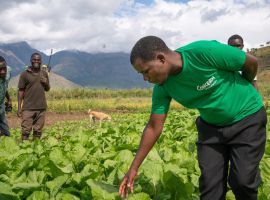
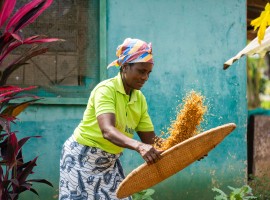
Improved farming practices and technologies has contributed to this improved financial wellbeing. Local farmers are trained in new agricultural and climate-smart techniques which teach them skills to significantly increase their yields and become lead farmers who then share their knowledge with their own and neighbouring communities. Programmes also assess and develop opportunities for farmers to store and sell their excess produce, providing an additional income and a sustainable food source for the local community.
Gender equality, inclusion and peacebuilding are all central parts of Concern’s work in Liberia and Sierra Leone. Conflicts are now resolved through communication, with joint solutions and a sharing of the household decision making. People say it makes them better parents, better husbands and wives, and that they are more financially viable as a result.
How aid cuts impact Liberia and Sierra Leone
For the many positives that the last 30 years has brought, the devastating impacts that international aid cuts are having on this progress cannot be ignored. Liberia and Sierra Leone are some of the poorest countries in the world. More than half of the population in Liberia live below the poverty line, while in Sierra Leone that figure stands at 26%.
In Liberia, emergency ready to use therapeutic food stocks ran out run in September 2025. Child wasting figures in Liberia had reduced to 3%, considered nationally a big success. But this figure has gone up again and currently stands at 8.5%. This puts child mortality at very high risk. Concern is working to provide guidance on how to make nutritionally rich products with food grown locally. But this is not a replacement for badly needed essential medicines to treat malnutrition.
In Sierra Leone, international aid cuts have had a devastating impact across many areas, with maternal, newborn and child health particularly affected. Sierra Leone continues to face one of the highest maternal mortality rates in the world, though significant progress has been made in recent years.


