




Knowledge Hub


What’s driving hunger in 2026?
A staggering 266 million people are at risk of acute hunger in 2026, according to the Global Report on Food Crises. Hunger often follows crises, including conflict and climate disasters, and here we look at some of the things driving hunger this year.
Key takeaways:
- Conflict between Iran and the USA threatens to hurt global supply lines and supply of essential therapeutic food for the most undernourished children.
- Low income and vulnerable communities will suffer more if the conflict continues, as they are reliant on industrial fertiliser which passes through the Strait of Hormuz.
- A ‘super El Niño’ predicted to rise in 2026, threatens to lead to more drought and food insecurity in vulnerable communities.
Fatima and Maryam's story
Fatima’s* daughter Maryam was a frail toddler who struggled to stand on her own feet. Maryam had severe acute malnutrition, and, on most days, Fatima and her children lived off thin soups made from whatever vegetables they had on hand. The family live in Afghanistan, a country where 17.4 million people face hunger, and Fatima had to bring her children to Concern ran health clinics for malnutrition treatment.
“The doctors are giving Maryam special nutritional food,” she says. “She’s slowly getting better. It’s a blessing for us.”
Today Maryam’s health has improved, but Fatima’s story is unfortunately common. Approximately 266 million people worldwide are at risk of acute hunger in 2026. The scale and intensity of hunger in low-income countries is now increasingly affected by soaring food prices caused by global conflicts and climate change.

Why are food prices increasing in 2026?
How does a small-scale farmer like Fatima end up being affected by the global food crisis? First, let’s look at what is causing food prices inflation over the last few years.
No matter where you are in the world, you’re likely to see the impact of global conflict and climate change reflected in your grocery bill. Food prices both in the UK and globally are soaring. According to studies, by November 2026, UK food prices could be 50% higher than they were in 2021.
Globally, the figures look bleaker, with food prices continuing to rise again, driven by the higher costs of vegetable oils, meat and cereals. Vegetable oils, (soy, rapeseed, etc) have seen a 5.9% increase in price since March, the highest they’ve been since July 2022. Meats are 6.4% more expensive than 2025, with beef and poultry being the priciest.
When we look towards low-income countries, there is a general trend of food becoming more costly across the board. Since 2006, food prices within low-income countries have risen by 45%. People living in extreme poverty are often reliant on subsistence farming and cannot afford the food prices set in their local markets, as local prices can be shifted by global issues, especially when ‘breadbasket’ nations, countries that are critical to the world food supply experience unrest. The conflict in Ukraine, for example, a country often nicknamed the ‘breadbasket of Europe’ due to it producing much of the world’s wheat and grain, has resulted in hunger levels rising worldwide, especially in regions like East Africa that are deeply reliant on supply from Ukraine.
For people like Fatima, even slight increases in food prices can be massive blows to their, health, nutrition and wellbeing. Already living in a precarious situation, Fatima and her family must plough the land for wheat, peas and other crops belonging to other farmers, but work is seasonal and dries up in the autumn and winter. Rice is a cornerstone of Afghan cuisine, but faced with costly food prices, even this simple ingredient became something Fatima’s family only has on occasion. Due to a lack of regular and nutritious food, while Fatima was still nursing Maryam, her milk lost its strength and quantity and she couldn’t feed her daughter, which contributed to Maryam’s severe acute malnutrition.

How the US-Iran conflict is driving up food prices
Time for a quick history lesson. Before the mid-20th century, most farmers relied on organic means, such as manure and compost to maintain and improve their crops. This changed during the Green Revolution of the 1950s, a period defined by the introduction of more high yielding seeds, better irrigation and industrial fertilisers within Asia and Latin America that saw rice and wheat yields double between the 1970s and 1990s. Between 1 to 2 billion lives were saved from hunger due to innovations pioneered in the Green Revolution.
The shift from organic fertilisers towards more efficient industrial fertilisers also facilitated a marriage between the natural gas industry and agriculture. The most prominent industrial fertilisers, urea and ammonium nitrate, are both derived from natural gas and are both potent nitrogen-based fertilisers that give plants and soil the necessary nitrogen for stimulating early crop growth, soil health and overall crop yields.
Simply put, they are lifesavers for large-scale farming, particularly for wheats and long-season crops, as they provide a steady release of nutrients into the soil and are quickly absorbed. So, in this union between the natural gas industry and agriculture, any disruptions on one end have dire consequences for crop supplies and food prices.
One-third of all fertilisers pass through the Strait of Hormuz in Iran. As a result of the current conflict, shipping through the waterway between the Persian Gulf and Arabian Peninsula has been effectively blockaded, with few ships being able to navigate through. Before the start of the conflict, the Strait saw a quarter of the world’s seaborne oil and a fifth of the world’s liquefied natural gas go through the narrow chokepoint. As mentioned, industrial fertilisers are derived from natural gas, so while that disruption is expected, you also see further disruptions from the severe impacts on oil and gas used for transportation, processing and refrigeration.
The World Bank expects overall energy prices to skyrocket to 24%, with urea already surging to being 86% more expensive compared to 2025. Farmers are expected to reduce usage on fertilisers, meaning that we’ll see a decline in crop yields, allowing food prices to further climb.
When we stop to think about who will be affected by this, the numbers do not look good. The World Food Programme has warned that 45 million more people could be pushed into acute hunger in 2026 if the conflict continues. And that’s on top of the 349 million people already living with hunger. More vulnerable people who are struggling to pay for food are likely to be priced out of staple foods, leading to more illness, malnutrition and in the worst case, death.

The impact of climate change on food production
The United Nations prediction on how climate change will impact agriculture in low-income countries is not optimistic, with the organisation highlighting that, “In the next 30 years, food supply and food security will be severely threatened if little or no action is taken to address climate change.”
We’ve previously covered the specifics of how global warming has considerable effects on people living in vulnerable communities. With its associated temperature increases leading to extreme heat and unpredictable weather patterns that can destroy crops and livestock, global warming is an ever-increasing cause of death and instability.
And the forecast for 2026 does not look too cheery, either. This year, the so-called super El Niño has potential to develop into a surge in extreme weather globally, with some predictions suggesting it could be the most devastating El Niño recorded.
For a quick throwback to school geography lessons, El Niño is a climate phenomenon whereby heat in the Pacific Ocean is released into the atmosphere across the equator. A severe El Niño often leads to intense drought and heat across Australia, Africa, India and South America, as well as heavy rain in Asia and powerful tropical storms in the Pacific. This goes hand-in-hand with highly variable weather patterns, and El Ninos have frequently led to production declines in affected parts of the world. The 2026 El Niño, dubbed the “Super El Niño event” could be the strongest on record and lead to record global temperatures.
The countries most at risk of a severe El Niño are the same countries that import the most fertiliser from the Persian Gulf. There is still a chance that we will not see a Super El Niño in 2026, however, if we do, farmers living in increasingly ecologically fragile communities will need to switch to drought resistant crops to weather its weight. This can be more challenging for farmers who are already living in vulnerable communities and struggling to grow enough to feed their families.
How Concern is supporting families facing hunger
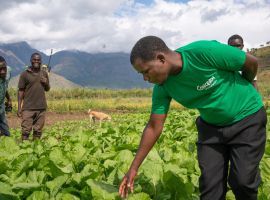
Yusuf Ali, a community leader in Somaliland, lives in the small village of Juvagalile. He has felt the weight of living in a difficult agricultural region. Here’s a snapshot of where the village was four years ago: The land was extremely dry, the soil was weak and families were facing repeat droughts and water shortages. Amid these obstacles, one thing that stuck out about the village, was how well the community worked together to overcome these obstacles.
Concern Worldwide works closely with farmers in low-income or vulnerable communities to help them thrive amid challenging circumstances. Three years ago, Concern Worldwide began to work with Yusfu’s community providing practical support. Farmers learned soil preparation and water conservation techniques, and improved ways of planting crops that increase their yield. Water storage systems were constructed and families received seeds to plant.
Yusuf noted how the initiatives build resilience in the community. Historically, Somaliland has been vulnerable to big El Niños, with the 2015/16 and 1997/1998 periods leading to a devastating loss of life and industry for the broader Horn of Africa region. However, thanks to Concern’s efforts, Yusuf is optimistic. “If drought comes again, we are better prepared because of the training,” said Yusuf.
If you’re interested in finding out more about Concern’s efforts in fighting against hunger, take a look here. And if you’re interested in speaking up against the UK government making the largest cuts to life-saving humanitarian aid in decades – something that will disproportionately hurt vulnerable people, in times of increased conflicts and greater climate threats, you can sign our petition to save UK aid.
*Names have been changed to protect the privacy of the individuals.


