

Knowledge Hub


The full-scale conflict in Ukraine will now enter its fifth year. What many hoped would be long resolved continues on, as difficult as ever but somehow becoming “normal life” for millions.
As with many crises, as the time ticks by, both news coverage and funding to support people who desperately need it fades. But the community living through the conflict continue to do whatever they can for their neighbours and Concern is proud to support these heroic efforts – from emergency cash to livelihood and psychosocial support. Every day, we see incredible individuals doing what they can for their communities.
The shelter that became a community hub

We met Svetlana* outside in the snow as an air raid alarm sounded. She led us downstairs to an underground shelter – a labyrinth of chambers, largely empty with whitewashed walls and concrete floors.
In the early days of the conflict in 2022 Svetlana told us that she and her family had spent most of their time in the shelter. Back then the floor was covered in sand and pipes lined the floor, which made the shelter not very accessible for elderly people, especially if they needed to get in and out quickly. They cooked here and slept here. During the initial stay there were no toilets and they had to relieve themselves in a bucket.
A few days later all of the utilities- including electricity and gas - were cut off and soon after houses nearby were destroyed in shelling. At this point Svetlana realised they had to leave and while fires still burned she, her husband, daughter and granddaughter packed and left for their daughter’s apartment in Kharkiv.
A year later they returned with their granddaughter. The local community received state support to build toilets. Then through our Joint Emergency Response in Ukraine (JERU) they received a cash transfer, which they are using to complete essential renovations – for example, they have painted the cement floor which makes it easier to breath as it contains the cement dust.
This is the only shelter within a radius of about 1 kilometre. The room in which we sit is filled with chairs which were taken from a local school – which has been rendered unusable by shelling. Before the conflict began there were ten schools in Izium. Now, only one remains whole.
Svetlana explains that the shelter has evolved into a community space for the local residents and the local government has even started using the space to host events for the city’s residents.
“This shelter provides relieve and peace of mind for a lot of members of the community. A lot of them, especially elderly residents get very scared during air raid alarms or when there is a drone attack so it is a comfort to know that there is a safe place for them where there will be other people.”
The community group that promotes safety rules is now working with JERU on how to make the space more comfortable with the remaining grant money. The current plan is to purchase accessible beds for use by elderly residents and to set up a children’s playroom.
Evacuating those with disabilities living in front line areas

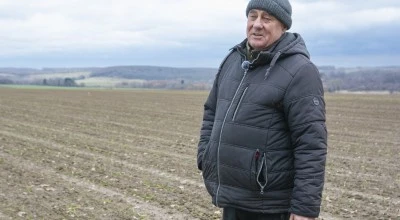
Volodymyr runs an NGO, Right Direct, from his home. Before the conflict in Ukraine the organisation focused on youth development activities but in 2022, it pivoted to support evacuations from front line areas for disabled and bed-ridden individuals as well as supporting the broader needs of the local community. The areas the NGO focusses on are called ‘grey zones’ - areas of land approximately 20-30 kilometres wide located directly between the opposing military fronts. They are extremely dangerous places, often targeted by military strikes and lacking in basic services.
“Evacuation happens when invaders are approaching a residential area. The people we evacuate are often elderly and don’t want to leave their homes. They very well understand that in a couple of days their home will be gone,” he says.
Volodymyr spends a lot of his time trying to convince people that it will be safer for them to leave.
“A lot of elderly people think it will be very difficult for them to start their lives over and refuse to leave, insisting – ‘This is my home and I will die here.’ It is really important to demonstrate kindness and reassurance, and make sure people know they will be helped and they are important.”
When the group started evacuations in 2022, they used a lot of their own money. They received military assistance for transport and fuel, and between late February and May 2022, they evacuated 200 people. Volodymyr explained that those evacuating had to walk for 12 kilometres before they could be picked up and that most who left learned their homes had been destroyed in a matter of days after they departed.
The work is dangerous - during one of the early evacuations, a fellow volunteer group who were due to meet Volodymyr and his colleagues in the grey zone were targeted by an air strike and every single person was killed. In 2023, Volodymyr suffered from cardiac arrest, and now has a stent in his heart.
“My main pride and the pillar of my stability is the knowledge that I was able to evacuate my elderly parents who are in their 70s – despite their protests and their desire to stay. They are now living very close by. They also keep their bags packed in case they have to evacuate again"
Volodymyr also managed to evacuate his seventeen-year-old son. He is now twenty-one years old and lives abroad.
Volodymyr’s NGO received a cash transfer from JERU as well as support from JERU’s partner Relief Coordination Centre (RCC). RCC take on the essential task of coordinating various evacuation groups in the area, which allows Right Direct to work more effectively.
With the latest JERU grant received, the group will renovate one of their ambulances to be accessible for wheelchair users. At present it is adapted for bedridden people, however this renovation will allow them to help a group of people that is too often neglected in conflict.
*Names changed to protect people’s identities