



Knowledge Hub


Water is the most crucial natural resource on Earth. It covers 71% of the surface and is the essential foundation for all life, ecosystems, and human health. Yet today, only one in four people worldwide have access to clean water.
While water sustains agriculture, hydration, and biodiversity, only a small fraction is accessible freshwater, making its conservation and fair access critical for survival. Here are six ways it shapes our world.
Water for health

We need water to live – around 60% of the human body is made up of water. It regulates critical functions like temperature, nutrient transport, and waste removal.
Without water, humans can only survive for a few short days. This is why Concern prioritises access to clean water in our work, not only to drink but also to use while cooking and washing.
In emergencies where water sources are damaged, water trucking is often brought in as a vital temporary measure. It is difficult and expensive, and typically water trucking isn’t sustainable past a few weeks. But in the most extreme circumstances, it can save lives. We have been continuing longer than this as part of our recent response in Gaza as the nature of the conflict means that we can’t repair as many water sources - or create new ones - as we usually would in other places we work.
Water for hygiene

In many of the fragile places we work, families have been forced to flee their homes to temporary settlements, like refugee camps. Often basic water and sanitation infrastructure doesn’t exist – there may be limited water sources without proper drainage. In these circumstances, handwashing is difficult and waterborne diseases like cholera can spread quickly, leading to serious illness and deaths, particularly child mortality.
Concern has a large Water, Sanitation and Hygiene (WASH) programme that is operational in nearly all the countries where we work. This includes providing access to safe water, building latrines, providing hygiene kits, and solid waste management, amongst other initiatives.
Water for food and nutrition

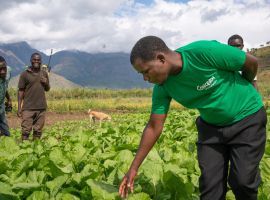
Outside of our own personal use for water – drinking and washing – it is essential to grow food. Agriculture is by far the world’s largest consumer of freshwater resources and when water is limited we see huge impacts on communities who rely on crop growth, livestock, and fisheries to eat and make money.
Communities in Kenya, Somalia and Ethiopia are currently experiencing a severe drought – driven by climate change – which is causing widespread hardship for millions of people. In our work we see regularly see the effects of drought – millions of livestock deaths, failed crops and rising malnutrition rates, especially in children
Water for education

While education isn’t necessarily something you would relate to water, a lack of water can make a huge difference to children living in fragile contexts. When schools have a reliable source of clean water, children are less likely to be absent, and more likely to gain new opportunities through completing their education.
This is especially true for girls, as many stay home from school during their period as they may not have safe or sufficient facilities at school. Additionally, when water sources are far from home, it’s often girls and women who have to travel and carry water for hours for households. The time spent collecting water could be spent learning in school if there were clean, reliable water sources closer to home.
Water for the environment

Healthy rivers, lakes and wetlands all contribute to a rich environment – for a diverse range of wildlife and plants. These in turn help safeguard against climate shocks, providing resilience by regulating heat, floods and droughts. When these ecosystems are threated by degraded water, it hugely affects long-term sustainability and impacts all other areas that we rely on for a healthy life.
At Concern we are seeing more emergencies than ever driven by climate change causing extreme weather. We work with communities on climate smart agriculture, nature-based solutions and disaster risk reduction and resilience.
Water for peace and stability

Water is so essential that when it is scarce it can be a source of conflict and displacement. In the instance of drought, pastoralists have to leave their families and travel long distance to maintain their livestock. Communities often clash over dwindling resources, leading to conflict and further challenges.
Some families are forced to leave their homes, often on foot with the bare minimum, to find the most basic of human rights, water. In these circumstances, many people find themselves having to create a life in temporary settlements with less resources and opportunities just to survive.
What can we do?
Water is essential for health, dignity and development. Here at Concern we work with communities in times of emergency to ensure there is access to safe water to drink, cook and wash with. In the first instance we may truck water in, but where possible we will install or repair water points such as wells.
We also work with people to find long-term solutions to providing water to rural communities and preventing the spread of disease.
While we’ll often look at innovative new ways to bring water to where it is needed most, we’ll also work with local experts on more traditional, or nature-led methods to help prevent flooding or to conserve water.
As you can see, there is no single solution when it comes to water. But with your support and the expertise of the communities we work with and our teams across the globe, we can move towards a healthier future, one drop of water at a time.
Funds raised in response to this appeal will go towards supporting Concern’s programmes helping communities in extreme poverty around the world. For every £1 you donate, we will allocate 10p of your donation to cover general support and running costs.


Other ways to help

Donate now
Give a one-off, or a monthly, donation today.

Join an event
From mountain trekking to marathon running, join us for one of our many exciting outdoor events!

Buy a gift
With an extensive range of alternative gifts, we have something to suit everybody.

Leave a gift in your will
Leave the world a better place with a life-changing legacy.

Become a corporate supporter
We partner with a range of organisations that share our passion and the results have been fantastic.
Create your own fundraising event
Raise money for Concern by organising your own charity fundraising event.