



Knowledge Hub


On International Women’s Day, we often hear impressive words from leaders, politicians and big-name corporations on how we can empower women and create change.
But the truth is that the people who are making the world a better place for everyday women are, so often, everyday women – so let's take a moment to hear from them. Here’s how three women around the world are fighting for their rights, justice, and gender equality.
Burundi: Mothers supporting mothers to improve their children's health

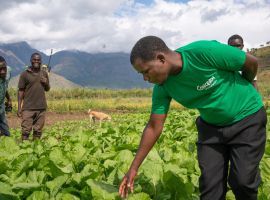
Thirty-five year-old Prisca Niyorugira is a mother of three and volunteers in her community of Kirundo to support new mothers and share practical tips on hygiene and healthy feeding. Her work helps build trust and drive lasting change in her community.
"I live in this area, I am a farmer and what I am doing is that I’m a leader for seeing how children are being fed in this area, how they are being fed in their families,” she says.
In Burundi, Concern is working with local communities to educate both men and women on better health and nutrition practices. As part of this, mothers volunteer to share their knowledge with other mothers in their community.
Prisca has spent two years in this role. She was selected by local women in her community to act as a representative.
"I am coaching 10 families in this area. In one month, I go three times for each family,” Prisca shares. “When a woman has given birth, I go and I teach her the lesson about how she could feed her children.”
For example, she teaches women how long a breastfeeding session should last, and when to start giving infants solid food. Prisca follows a programme to teach her fellow mothers, however since she lives in the neighbourhood, she sometimes adjusts her lesson if she notices an issue.
She says: “If I notice that there are some things that are not going well, like feeding the children in a normal way, then I prefer to organise or plan a lesson dedicated to that in order to see the changes. And I give her pieces of advice in order to see how she can prepare food in a good way.”
Bangladesh: Students breaking down stigmas around menstrual health

In Bagerhat, Bangladesh, students from different schools in the area work together beneath the umbrella of the Adolescent Forum to encourage young people to become more active in their communities. One of these students is 15 year-old Lamia.
“We were especially focusing on the menstrual hygiene. At first, we were so shy - we never talk about those issues,” she shares. “But then, as a peer educator we started working with the students and slowly people started talking more.”
In Bangladesh, there is often a strong stigma around menstruation, which can be seen as shameful. Only about a third of Bangladeshi women are taught about menstruation before their first period, according to a 2018 study. Information is often passed down through mothers or sisters, which can lead to knowledge gaps.
Fortunately, people like Lamia are breaking down taboos and paving the way for girls to know more about their own bodies.
“I explained that changes in your body is normal and that you have to learn about it – about your body and what you should and should not do,” says Lamia. “The whole class had a different opinion. But now I can see changes. Now everyone can talk about this and it's easier.”
Yemen: Increasing access to reproductive health services

“Many women and babies have died due to the lack of reproductive health services,” says Waseefa, a midwife at a rural health clinic in Yemen. Nationally, one woman dies in childbirth every two hours.
Reproductive health remains a taboo subject in the country, as cultural and social norms limit open discussion and access to services. For this reason, the lack of a privacy in health facilities creates another obstacle for Yemeni women and girls to access essential medical care.
This was the case at the health clinic in the Lahj Governate where Waseefa works. Two years ago, the clinic struggled with lack of space and patients often had to wait outside of the facility before receiving treatment.
In collaboration with the Ministry of Health, Concern supported the construction of an additional room to be used as a space to deliver reproductive health services for women and girls. This has provided a safe, private, and dignified environment for women to access services such as antenatal care, deliveries, and family planning. A seating area means they no longer have to wait outside.
“Women and girls now feel safe visiting the clinic for critical antenatal and postnatal care, skilled deliveries, and family planning,” Waseefa says. “Many women are now coming for the check-up and deliveries, and I can now discuss maternal health issues and family planning matters with them.”
Women in the community have already noticed a difference.
“I am receiving counselling for breastfeeding, and family planning medications. Now that there is enough space and privacy, we feel comfortable talking to the midwife to discuss problems and family planning issues,” shares Alveera*, a mother of a twins.
*Name changed to protect the individual's security


